
Playoff outcomes taught us some real football betting fans lessons.
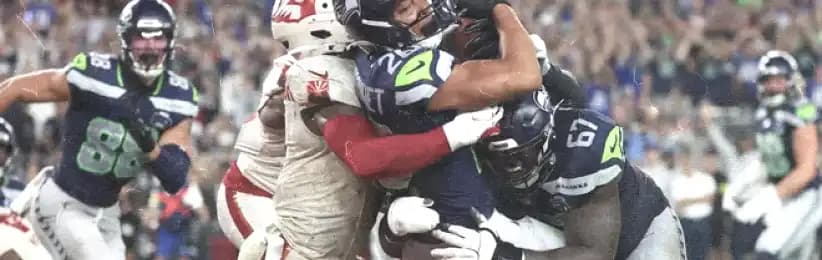
Safe projections and the public attraction to brand name teams got roughed up this NFL postseason. But the betting lessons they taught – especially on someone else’s dime – can help out when next year’s NFL playoffs roll around.
A Changing of the Guard in NFL Betting
Coming into this postseason, most NFL betting markets lined up on the same core storylines: top seeds with elite efficiency metrics, the best quarterbacks, and home-field edges were expected to control the bracket.
But this year was the first in many NFL seasons where names we were used to seeing every January suddenly ended up on the golf course instead of on the field. Teams like the Chiefs, Ravens, and Lions were out. No Mahomes, no Lamar, no Dan Campbell and his high-octane offense.
That made room for names that no one had pegged in their NFL futures bets to start the season. Sam Darnold, all the way to the Super Bowl; Matthew Stafford, looking for one more trip to the big dance; and Brock Purdy and Bo Nix looking to make their deepest dives so far into the NFL playoffs.
For NFL bets, that meant more disruption than ever.
A lot of betting models made solid Wild Card picks, but the one big miss came early in the playoffs. The Eagles over the 49ers was the popular play for the stats models and the public money, where the reigning champs from Philly were supposed to win and cover. Especially at home, where the Lincoln Field crowd and the January weather was supposed to give an added boost against a West Coast team playing way out of their comfort zone.
But the Niners won 23-19 in a game that ended up reinforcing something that’s shown up in multiple recent postseasons: once injuries pile up and matchup-specific weaknesses get exposed, season-long power ratings lose some of their edge. Analytics still pointed to San Francisco as the more complete team, but public perception and a lot of models hung onto the narrative of the defending NFL champion playing at home. Takes time to shake old ideas.
The moneyline for Philly ranged in the -225 to -240 area, compared to +180 for San Fran. The spread on some books even got to -6.0 in the Eagles’ favor and ranged around -3 to -4.5 for the entire week. But even with all of San Francisco’s injuries – including losing TE George Kittle in the second quarter – the Eagles season-long soft offensive numbers just couldn’t rely on muscle memory from the past few postseasons. Bettors and NFL oddsmakers should have looked harder at just how out of sync the Eagles played all year on offense. How bad? Niners receiver Jauan Jennings completed more passes (1) for over 15 yards than Philly QB Jalen Hurts did in that Wild Card upset.
We also watched the Rams show up as big road favorites in Carolina in this year’s NFC Wild Card round. LA came into Carolina at -10.5, a spread that we rarely see in the playoffs.
That line reflected not just team strength but the belief that the Panthers’ negative point differential (-69 on the season) and weak regular season record (8-9) would finally cave in under playoff pressure. Any analytical models usually love point differential and W-L records.
Instead, that matchup turned into another data point in an ongoing playoff trend: extreme favorites can win and still fail to justify the spread. Especially when the underdog is live. Carolina had already beaten the Rams in the regular season. And they had a QB in Bryce Young who had six 4th-quarter and OT comebacks during the season. So you know he’s capable of keeping things closer than 10+ points.
And here’s a red flag for NFL playoff betting: since 2000, teams laying double digits on the road in the postseason are winless against the spread, a trend that continued this season with the Rams barely squeaking out a 34-31 win.
Why The Models Keep Getting Put in A Blender
So what’s actually breaking down here? The betting models or how people are holding onto old data and public perception?
Most public-facing projections, from media picks to AI-driven forecasts, lean heavily on season-long signals like point differential, DVOA, EPA, success rate and others. Those are legitimate edges in the regular season. But they become less predictive when you drop them into a playoff environment.
NFL playoffs are a different beast for a few reasons when it comes to underdogs, especially those with big spreads.
First, you get compressed sample sizes. Recent momentum – or lack of it – matters. Teams come into January playing above or below their season-long trends for the last 4–6 weeks, but those models and stubborn thoughts are often scanning a full 18-week, 17-game season. The Niners came into Philadelphia having won 6 of their last 7, and Purdy was on fire for the last stretch with 11 TD passes in his last 4 games.
Then you have opponents who usually know you well. An underdog has a season’s worth of game film to break down by the time Wild Card Weekend rolls around, and in many cases the teams have played each other once or even twice that season already. That shrinks any talent gaps.
January weather comes into play too. It can flatten the advantage for the favorite, especially when mobility and visibility are low because of snow or slick field surfaces.
Finally, injuries. By the end of the regular season, many NFL squads are limping badly. Another advantage flattening factor. The models do factor these in, but it’s tough for them or the betting public to really gauge how big the drop-off is between a starting linebacker or a shutdown corner who are a complete menace all over the field compared to their slower back-ups.
Here’s the real lesson for this NFL postseason, and it’s worth keeping in mind as we head towards the Super Bowl too: the numbers still matter, but context – shaking off stale storylines, looking closely at matchups, and general playoff pressure – matters just as much.