
What to look for and how to bet when that winter chill hits.
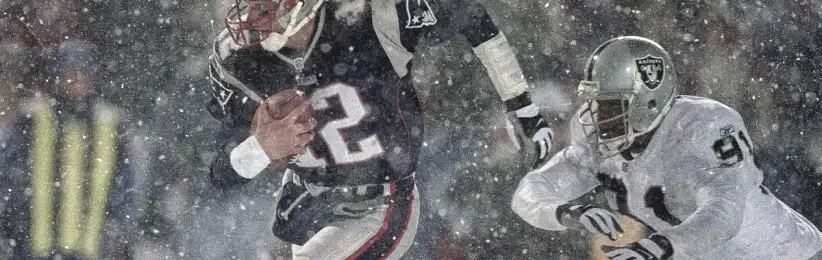
Both the NFL and NCAA college football seasons experience a pretty dramatic turn as soon as December and January roll around.
Betting on both leagues changes too, and sharps who get into weather forecasts and then deeper into players’ performances when the weather starts hitting the 40’s and 30’s can often find an edge.
Cold Weather Turns Scripts Upside Down
Get ready for some serious changes to a team’s fortunes when they hit a cold weather city in the NFL or in college football. Sure, an SEC game or AFC South matchup in December or January won’t get hit as bad. But for big parts of the country, December can really mess with the storylines and trends that have dominated since September. We’ll focus on those.
Once you’re into the final month, a team’s early season performance might as well go out the window. September Jared Goff isn’t December Jared Goff, unless he’s at home. A Cardinals receiver like Marvin Harrison Jr. might be unrecognizable when it comes to catching a frozen rock at Lambeau in the final month of the year.
Books know this. They’re watching the weather channel like you are. Which is why you’ll see totals move aggressively up or down on early-week weather forecasts in places like Buffalo, Cleveland, Green Bay, Chicago, and Pittsburgh. In college ball, the Big Ten and MAC games are likely to be the most affected. An O/U that might sit at 50+ before Halloween could hit 42-43 by Christmas time.
But you can dig deeper. The trick is, it’s not just temperature or even snow that can change a team’s plans and ability to run the plays they want. Just recently the Bengals and Bills combined for more than 70 points and there was snow on the field the entire game. Smart bettors would have pounced on lines and player props that were too focused on the cold and snow alone for that game. That’s because the books and the public money might underestimate the ability of Joe Burrow and Josh Allen to move the ball. Elite QBs know that their receivers will be able to make cuts and get separation easier when the defender loses a half step on a snowy, frozen field.
So what is the hidden key to winter weather betting? It’s wind that is usually the key tell. Read the forecasts early and check them closer to kickoff. Once you see winds above 15–20 mph, that’s when you’ll see passing efficiency and explosive plays drop. Point totals and player stats for passing and QB prop bets move down too. Of course, that’s also the time for the smart money to shift some attention to running totals.
The Patriots–Bills “wind game” in December 2021 at Orchard Park is an extreme case study but it proves the point. Ahead of kickoff, it was the passing-heavy Bills as the -3 favorite, with the O/U total at 40. Once the 40–50 mph wind gusts kicked in and balls started dropping or being blown way off-target, it was all Under and the Patriots running game from there. New England threw three passes – yes, just 3 – all night. Belichick still had the upper hand back then as a strategic master. They won 14–10 as the underdog, and the game never came anywhere close to the total. Buffalo was 7-4 coming into that game, including 35-0 and 45-0 wins in September and early October. New England also had wins where they’d racked up 54, 45, and 36 points on offense. So you know the books and the casuals were expecting points.
A word of caution though. The mistake that casual bettors make is treating cold like a universal Under signal. Sharps know the real edge lives in specific combos where cold is just one factor. Heavy wind, active snowfall during the game that affects visibility – these things can tank a team with a passing edge but a weaker run game. Don’t just hammer the under and lower football player props based on cold alone.
Totals and ATS Volatility in December Football
Offensive coordinators also get hit by weather. When the temperature drops and the wind chill and snowfall ramp up, they can opt for safer calls like more runs, shorter passes, and less of a chance of going for it on fourth down. These all usually add up to the lower totals, and they level the playing field for a team that would normally be a heavier ‘dog.
College football late‑season games in the Big Ten, MAC, and Northeast games often come with totals that sit well below what you see in September. Closing numbers can swing 5,6,7 points during the week whenever real December weather enters the forecast. Because college special teams can be less consistent and roster depth is thinner, that bad weather can introduce bigger variance in field position and efficiency rates. You’ll also see more missed field goals, shanked punts, and blown assignments in coverage. Same type of caution as above though: that variance doesn’t always mean low scoring games. Sometimes it’ll make for shorter fields and defensive or special teams scores. Blindly betting “bad weather Unders” in NCAAF can burn casual bettors. The smart money looks closer at the matchups and the talent or depth.
From an ATS standpoint, December can be the spot in the schedule, whether it’s NFL or college football, where power ratings and public perception lag behind the real story. Injuries and fatigue accumulate by now, and they don’t get any better in cold winter conditions. The market numbers still lean on efficiency metrics that include a lot of games that were played in perfect or neutral conditions.
Your edge? Teams from warm climates or dome environments often underperform against the spread in winter games on the road. At the same time, northern teams that are more used to rough conditions, even if they’re sitting at 4-7 or 6-6, start covering the spread more often. Books know some of this, but they still can tend to create lines that reflect overall season strength. That gap is where you can find value.
The December NFL and college standings explain what happened for the past three months. Your bets should reflect the upcoming weather this week, and each team’s strength or weakness in the passing game and on the ground.