
React to leaks the right way and avoid emotional bets.
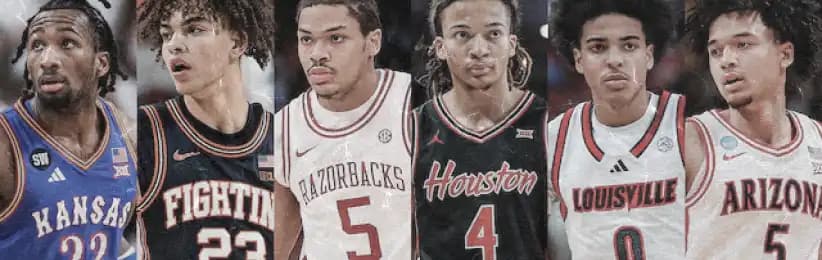
Your NBA Draft best bets need a whole different set of skills beyond the metrics of an actual NBA game. The books aren’t able to use their models with data on matchups and who’s on a heater lately. They’re subject to a lot of the same pre-draft info and intrigue as you are.
That’s why draft odds can move more in 12 hours than point spreads do in a full week. It’s also why the smart money learns who and what to listen to, and what to ignore.
Leaks and Uncertainty Shape NBA Draft Odds
We saw it in 2022, when Paolo Banchero blew up from around +2000 at some books into the outright favorite to go No. 1 within a couple of days.
That doesn’t happen randomly. It’s all off-sharp money and shifting intel, not anything that happened on the court. Surprise movers close to the NBA Draft, like Paolo Banchero, often see their stock shift dramatically despite having last taken the court in early April.
Why such a big move? That’s the NBA Draft environment. It’s not like a regular-season game or a 7-game playoff series. The NBA Draft comes with thin markets and numbers that are unlike what the sportsbooks are used to providing for basketball odds. They like real data, game-by-game matchups against predictable opponents. With NBA Drafts, unless you have a Jordan, a LeBron, or even a Wemby, there are moving parts that the books find hard to price.
Team fit, team needs, player agents, markets that can provide more off-court dollars, intrigue, smokescreens, and trades. Try pricing all those variables every offseason. That means the lines for the draft are practically begging to be attacked by the smart money, while the betting public just goes off vibes and storylines in the media.
For sharps, they treat the draft like an information market with a built‑in error rate. It’s more like awards voting or free-agency reporting than it is playing spreads and totals. You’re buying (or fading) what all those other variables might mean.
Check out the latest NBA odds at Lucky Rebel.
React to Leaks – But Don’t Get Trapped
In draft week, you’ll see every tweet, hear every podcast, and read every mock draft, and you’ll have to auto-filter them to make sense of it all.
Treat each one like a data point, not something you need to react to every time. They come out as big news, especially when a big personality is chirping about them, but sharps don’t treat them all equally.
A big NBA reporter’s tweet on the morning of the 2022 draft had everyone reading that 1‑2‑3 would be Jabari Smith, Chet Holmgren, and Banchero. He had enough clout to completely reshape the market, with some books pushing Smith to absurd prices like -9000, -10000.
Less than an hour before the draft, the same reporter pivoted. Suddenly (and correctly), he reframed Banchero as “looming as a frontrunner.” It’s that kind of whiplash that buries emotional bettors. They would have paid ridiculous prices in a market that’s already moved miles from where it was, with zero edge. They’d just be betting the headline when changing from Smith to Banchero at #1.
The disciplined sharp? They either already had Banchero at big-plus numbers to go #1 and didn’t react to the first tweet, or they decided they’d missed the best of it and sat tight. Many of them would outright ignore the reporter’s correction or use it as confirmation that the market was mispriced because the books overreacted to one tweet.
Timing and Trust
Sharps develop layers of trust in their draft sources of information.
Team‑specific beat reporters with a history of accurate draft reads? They’ll be more trustworthy than a national talking head who barely knows the starting 5 of an NBA team that doesn’t play in their time zone. A plugged-in reporter who covers a front office every day is also relatively easy to follow for draft alpha.
They’ll sniff out real news that’s different from an agent-driven leak. That agent has other motives, trying to push a client up the board or sending out signals that his client isn’t interested in heading to a handful of cities. So when a top‑tier source has info that lines up with a sudden wave of sharp money, that’s usually when the smart money acts. They’ll also fade that talking head on a national highlight sports cast.
The other piece is timing. You don’t chase every rumor. That’s what happened to the Banchero/Smith seesaw followers. You decide what price you like before you’re willing to fire. If a leak pushes a favorite from -150 to -300 and nothing structural has changed besides some noisy drama, a sharp knows it’s a pass. They might even buy the other side small rather than rush a bet on the steam.
Avoid Emotional Bets When Big Moves Happen
Overreacting to one shocking outcome is never a good idea when you’re live betting any sport. That goes for the NBA Draft too. When a surprise pick hits – like a team reaching with the 8th pick for a guy that everyone had somewhere closer to #20 – there’s always a wave of takes. “The board is blown up!”, “All bets are off!” etc.
In practice, teams in the first round, especially since it’s so important to a franchise’s immediate future, almost always stick close to the plan they had coming into draft night. One outlier doesn’t rewrite everything, even if socials and draft shows are telling you otherwise.
Sharps? They’ll pause when that surprise pick drops, sure. Take a second to re-evaluate if that pick has a chance to impact what other teams are still needing. Then they’ll look at the new odds and see if the books have overreacted too, to see if there’s a new edge that opened up.
Build a Draft Night Plan
First, no one is betting the entire first round. It’s usually a narrow set of markets like No. 1 overall, and who’s going to go in the top‑five, top‑ten, or a handful of draft positions and specific teams taking specific players. You don’t want to try to sweep the board. You’re trying to score a few bad numbers from the books with all the info you’ve gathered.
That info comes from the three or four reporters you trust for specific teams. Then you can try to find out which front offices have historically been leakproof and which ones spill everything. You can usually spot them in every pro sport. Past drafts have shown that some teams (and some agents) are way more willing to put their plans into the media than others, and those patterns tend to stick year over year.
Finally, set hard guardrails around price and exposure. If you see a big jump to -150 or shorter for a player to go in the top 10, but you had him at -120 into plus money, don’t chase. The value is mostly gone. There’s always a next player up on the board.