
Lucky Rebel Sportsbook · FIFA World Cup 2026 · Group J
Argentina
La Albiceleste
Three stars. The reigning champions. The team to beat.
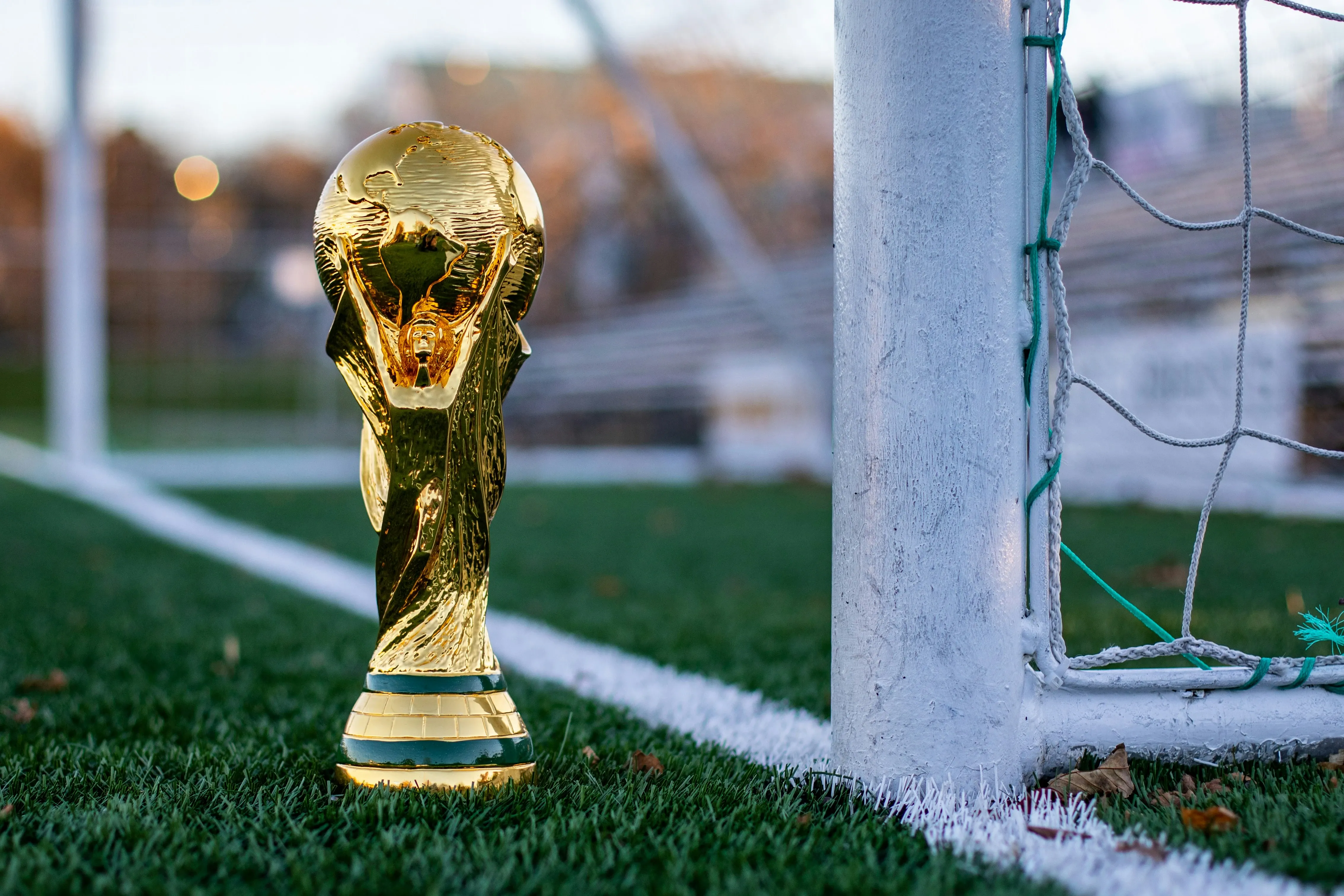
Argentina arrives in North America carrying something rarer than form. They arrive carrying a trophy. The third star on the crest is fresh. The captain who put it there is still in the squad. The coach who designed the system that won it is still on the bench. Eighteen of the twenty-six men who lifted the cup at Lusail Stadium on December 18 2022 are likely to be on the plane to Kansas City. No reigning champion has successfully defended a World Cup since Brazil in 1962. Argentina is the team most likely to break that streak.
The case for it runs deeper than the result in Qatar. La Albiceleste topped CONMEBOL qualifying with thirty-eight points from eighteen matches, finishing nine clear of second-placed Ecuador. They beat Brazil 4-1 in Buenos Aires in March 2025 to mathematically confirm their place. They added the 2024 Copa America to the cabinet alongside the 2021 trophy from Maracaná. Three major titles in four years under Lionel Scaloni. The closest thing to a dynastic run any non-European nation has produced in the modern era.
The case against it is the calendar. Lionel Messi will be thirty-eight years and eleven months old on the day of Argentina’s opener against Algeria at Arrowhead Stadium. Nicolás Otamendi will be thirty-eight. Rodrigo De Paul, Leandro Paredes, Ángel Correa and Marcos Acuña are all the wrong side of thirty. The spine of the team that won in Qatar is four years older. The replacement generation behind them is talented and unproven. Mastantuono, Echeverri, Garnacho, and Carboni when fit. The names are there. The track record at senior international level is not. Whether the older legs hold up over six knockout games in the North American summer is the question that will decide whether Argentina becomes the first repeat champion in sixty-four years or the latest cautionary tale in a list that includes France 2002, Spain 2014 and Germany 2018.
Group J Fixtures
Algeria first at Arrowhead Stadium in Kansas City. The Desert Foxes have qualified for North America in steady fashion under Vladimir Petković and arrive with Premier League pace through Riyad Mahrez and Saint-Maximin still on the books. Argentina have only played them once in history, a 4-3 friendly in 2007. Then Austria in Arlington at the AT&T Stadium, the closest thing the group has to a banana skin. The Austrians beat Argentina 2-0 the only previous time the two countries met at a World Cup, the 1982 group stage in Spain. Marcel Sabitzer at Borussia Dortmund and Konrad Laimer at Bayern Munich anchor a midfield that gives possession-based opponents real problems. Then Jordan, World Cup debutants under Hussein Ammouta, who reached the 2024 Asian Cup final on the back of a remarkable run that included beating South Korea in the semi-final. Argentina are heavy favourites for all three. Argentina are also the team that drew goalless with Iceland and lost to Saudi Arabia in opening matches at the last two World Cups. Tournament football has its own logic.
| Date | Match | Kickoff | Preview | Bet |
|---|---|---|---|---|
| 16 Jun | Argentina vs Algeria | 20:00 CT | Preview | Bet |
| 22 Jun | Argentina vs Austria | 12:00 CT | Preview | Bet |
| 27 Jun | Argentina vs Jordan | 21:00 CT | Preview | Bet |
All kickoff times in local venue time. Kansas City and Arlington both sit in Central Time. FIFA-published times in ET; converted to venue local for accuracy.
A History Written in Gold — Three Times
Argentina’s World Cup history begins where the World Cup history begins. The first final, in Montevideo on July 30 1930, lost 4-2 to Uruguay across the river. They walked off the pitch and didn’t return for the next four tournaments. Domestic factional politics inside the AFA, professionalism rows, and a quiet fury at the way the early World Cups were being run by Europeans for Europeans kept them out of 1934, 1938 and 1950. They came back in 1958 and went out in the group stage. The reckoning had to wait.
It came in 1978 at home. César Luis Menotti’s side beat the Netherlands 3-1 in extra time at Estadio Monumental, Mario Kempes scoring twice and Daniel Bertoni adding the third. The first star went on the shirt. Eight years later in Mexico, Diego Armando Maradona walked through five England players in a quarter-final, won the trophy almost single-handed, and changed what the world believed a footballer could do. The second star arrived. Then the wilderness. Italy 1990, a final lost on a disputed penalty to West Germany. USA 1994, Maradona sent home from the World Cup for failing a drugs test, the team unravelling without him. France 1998, a quarter-final exit to the Netherlands and Bergkamp’s defining moment with the outside of his right boot. Germany 2006, a quarter-final loss on penalties. South Africa 2010, a 4-0 demolition by Germany under Maradona’s own management.
2014 in Brazil should have been the third star. Messi led Argentina to the final at the Maracaná. They lost 1-0 in extra time to a Mario Götze finish that has been replayed in every Argentine bar for ten years. Russia 2018 was a round of sixteen exit to France with Mbappé announcing himself to the world at nineteen. Then Qatar 2022. The first match against Saudi Arabia, lost 2-1, the longest unbeaten run in international football ended in ninety minutes. The recovery against Mexico in the second match. The route through Australia, the Netherlands in the most chaotic quarter-final in modern World Cup history, Croatia in the semi-final, and France in the final at Lusail. Three-three after extra time. Won on penalties. Messi lifting the trophy with the bisht draped over his shoulders. The third star.
Papelitos. 25 June 1978.
Estadio Monumental, Buenos Aires. Sunday afternoon. The eleventh FIFA World Cup. Argentina against the Netherlands in the final. Seventy-one thousand inside the ground, every one of them given a roll of paper streamers on the way in, the Argentine FA having decided that the visual atmosphere of the tournament should be a kind of permanent indoor snowstorm. The Dutch walked out into the tunnel and stood for thirteen minutes while the home side made them wait. They emerged into a stadium that looked like a different planet. Paper falling from every tier in continuous sheets. The pitch invisible from the touchline. The Dutch captain Ruud Krol later said it was the only stadium he ever played in where you couldn’t see the goalkeeper from the centre circle.
Mario Kempes opened the scoring in the thirty-eighth minute, slaloming through the Dutch defence and finishing low past Jongbloed. The Netherlands equalised through Dick Nanninga eight minutes from time. Rob Rensenbrink hit the post in the last minute of regulation with the trophy three feet away. Extra time. Kempes again, the same long hair and the same stride, charging through traffic to score his second of the day. Bertoni added the third. Daniel Passarella climbed the steps to receive the trophy from FIFA president João Havelange. Argentina were world champions for the first time. The papelitos were still falling.
The papelitos remain the most photographed atmospheric image in World Cup history. The stadium looking like it was snowing. The players walking out through clouds of paper. The visual that defined Argentine football as something unlike any other country’s.
Kempes finished the tournament as Golden Boot winner with six goals and Golden Ball winner as the best player. He played the rest of his career mostly in Spain, came back to Argentina briefly with River Plate, and finished it out in lower-division Austrian football in his late thirties. He had won a World Cup in his home stadium in front of his own people, scored twice in the final, and worn the long hair and the Argentina blue while doing it. The image of him celebrating the second goal with both arms raised and the papelitos still falling around him sits in the same shelf of Argentine cultural memory as the Maradona run eight years later. The first star on the shirt arrived on a Sunday afternoon at the Monumental. La Albiceleste have spent the forty-seven years since trying to put a second one alongside it on home soil. They have come close twice. They have not yet succeeded.
The Goal of the Century. 22 June 1986.
Estadio Azteca, Mexico City. Quarter-final of the World Cup. Argentina against England. The fifty-fifth minute. Diego Armando Maradona collects the ball ten yards inside his own half with his back to the England goal. Four minutes earlier he had already scored the most dishonest goal in World Cup history. He had punched the ball over Peter Shilton from a yard out, the Tunisian referee had failed to spot it, and the goal had stood. Argentina led 1-0. The crowd at the Azteca knew what they had seen. The bench knew what they had seen. The man who had scored it would later call it the Hand of God, attributing the moment to divine intervention rather than the kind of conscious cynicism that nobody in the stadium had any difficulty identifying. The fist of God. The cynic. Setup line for what came next.
Now, four minutes later. Maradona on the ball ten yards inside his own half. He turns past Peter Beardsley with the outside of his left foot. He drops his shoulder past Peter Reid. He accelerates down the right channel into the England half with Reid on his back trying to recover. He drops his shoulder past Terry Butcher who has come across to cover. He cuts inside Terry Fenwick with a touch so soft it barely disturbs the grass. Butcher is back in front of him having sprinted thirty yards across the pitch. He goes past Butcher again. He is now ten yards from goal and Peter Shilton is the only thing between him and the net. He dummies right, pushes the ball left, dinks it around Shilton with the outside of his left foot, and slides it into an empty net. Steve Hodge, having tracked back the entire move, slides in too late.
Ten and a half seconds. Fifty-two metres. Five England players beaten. The ball glued to his left foot the entire way. The commentary by Argentine broadcaster Víctor Hugo Morales is a national possession in its own right, a screamed litany of barrilete cósmico and de qué planeta viniste that has been replayed in Argentine households the way Wolstenholme is replayed in English ones. Cosmic kite. From which planet did you come. The most beautiful goal ever scored in a World Cup, voted as such by FIFA in 2002 in a global poll that wasn’t close. Argentina won the match 2-1, beat Belgium in the semi-final on two more Maradona goals, and beat West Germany 3-2 in the final at the same stadium twenty-six days later.
The two goals are inseparable. The Hand of God comes first because the Hand of God is the prelude. Maradona had to be in the game’s mythology before he picked the ball up in his own half four minutes later. He had already established himself as the cynic capable of the most dishonest goal anyone had ever seen at a World Cup. Then he established himself as the genius capable of the most honest one. The fist of God and the foot of God in the same eleven minutes against the same set of defenders on the same patch of grass at the same stadium where four years later he would lose another World Cup final on the disputed Andreas Brehme penalty and walk off the pitch crying. Mexico 1986 was Maradona’s tournament. The Azteca was his theatre. He carried Argentina to a World Cup almost on his own and the whole thing pivoted around the eleven minutes between his fifty-first-minute punch and his fifty-fifth-minute slide.
Lusail. 18 December 2022.
To understand what happened at the Lusail Stadium in Qatar on the eighteenth of December 2022 you have to understand the eight years that came before it. 2014, the Maracaná, Argentina against Germany in the World Cup final. Higuaín missing a one-on-one with Manuel Neuer in the first half that he scored ninety times out of a hundred at club level. Götze in extra time, the chest-down and the side-footed finish. 1-0. Messi walking past the trophy on the way back to the changing rooms with his head down, beaten. 2015 Copa America final. Lost to Chile on penalties. 2016 Copa America final. Lost to Chile on penalties. Messi missing his spot kick into the night sky. He announced his retirement from international football in the press conference afterwards. He was twenty-nine years old.
He came back. The country pleaded with him through President Macri and through hand-painted murals on the walls of his old neighbourhood in Rosario, and he came back. 2018 Russia, knocked out by France in the round of sixteen, the Mbappé announcement game. 2019 Copa America semi-final, lost to Brazil. The wilderness was three years long. Then July 2021. The Maracaná again. The same stadium where the Germans had broken him. Argentina against Brazil in the Copa America final. Ángel Di María chipping Éderson over the top from a Rodrigo De Paul long ball. 1-0. Messi finally lifting an international trophy with Argentina, twenty-eight years after Argentina’s last one. He sat on the pitch afterwards and cried with a bandage around his calf. The drought was over. The biggest one was still to win.
Eighteen months later, Lusail. Argentina against France in the World Cup final. Messi penalty in the twenty-third minute. Di María finish in the thirty-sixth from a flowing eight-pass move that started with Otamendi heading clear from the Argentine box. Two-nil at half time. Eighty minutes gone, still 2-0, the trophy ten minutes away. Then Mbappé. Penalty in the eighty-first. Equaliser in the eighty-second from a Coman cross. Two-two. Extra time. Messi finishing past Lloris in the hundred-and-eighth from a Lautaro shot blocked on the line. Mbappé penalty in the hundred-and-eighteenth, his hat-trick goal, scored at thirty-five seconds before the final whistle. Three-three. Penalties.
Mbappé scored. Messi scored. Coman missed. Di María scored. Tchouaméni missed. Paredes scored. Kolo Muani scored. Montiel for the win. Argentina 4-2 on penalties. Lionel Messi, thirty-five years old, in his fifth and last World Cup, walked across the pitch towards the makeshift presentation stage with the Qatari emir waiting to drape a black bisht over his shoulders. He lifted the trophy with the bisht still on. The image went around the world in eight seconds. The argument about him and Maradona on Argentine terms got resolved that night in Lusail. The third star went on the shirt. The wilderness was forty-six minutes between Mbappé’s first goal and the final whistle. The reward was the rest of his life.
Mercurial. From the Potreros to Europe.
Argentina’s pipeline doesn’t run through state academies. There is no Clairefontaine on the pampas. The country has never invested heavily in the kind of formal residential coaching infrastructure that France, Germany and Spain built in the 1990s. What Argentina has instead, and has had for the better part of a century, is the potreros. Dirt and concrete pitches in the back streets of Rosario, Buenos Aires, Córdoba and La Plata. Unmarked. Often unlit. Eighteen-a-side games that ran from after school until somebody’s mother shouted them in for dinner. The system is unstructured, intuitive, brutal. The system also produces, with monotonous regularity, the most technically gifted footballers in the world.
I was a kid in the leafy suburbs of north Leeds in the summer of 1978. The matches came in late on the BBC, evening television for boys whose Saturday afternoons were already given to football. What I remember more clearly than any of the goals is the half-time entertainment. Every match. Argentine boys my own age doing keepy-ups on the pitch in front of the cameras. Not drills. Performances. Thirty consecutive touches without the ball going above waist height, a flick onto the thigh, the chest, then somewhere between the shoulder blades where the ball would settle on the back of the neck as if it had been placed there by hand. The boy would walk a few steps with it balanced behind his head and shrug it forward over his shoulder to start again.
I spent a whole summer trying that trick with a leather Mitre we used for road football. Never once made it stick. Nor did any boy I knew. For the eight-year-olds on the pitch in Argentina it appeared to be the easiest thing in the world. That gap was the production line in action. We didn’t have the vocabulary for what we were seeing.
What we were watching was the visible tip of a system. The boys on the pitch had been juggling balls since they could walk. The ball was lighter, smaller, cheaper, more often a sock stuffed with rags or a tied-up plastic bag than the leather Mitre we were trying it with in West Yorkshire. They had been juggling on uneven concrete, on sloping dirt, in tight angles between brick walls, with traffic two metres away. The technique they were demonstrating at half-time wasn’t a circus act. It was the residue of ten thousand hours of muscle-memory development that they had completed by the age of seven, in environments that demanded close control because anything less than close control meant losing the ball into a road or a drain or somebody’s open kitchen window.
The names that came through the same pipeline make a list as long as any in football history. Alfredo Di Stéfano in the 1940s. Mario Kempes in the 1970s. Maradona himself, who grew up in Villa Fiorito on the southern fringes of Buenos Aires, the kind of barrio where the dirt pitches were the only flat surfaces for half a mile. Juan Roman Riquelme out of Don Torcuato. Carlos Tevez out of Fuerte Apache, a working-class housing complex in the western suburbs of the capital. Sergio Aguero out of Quilmes. Ángel Di María out of Perdriel, a working-class neighbourhood in Rosario where his parents ran a coal yard and where he played his first football barefoot. Gonzalo Higuaín. Lautaro Martínez out of Bahía Blanca. And in the same Rosario barrios that produced Di María, on the streets around Avenida Estado de Israel where his father worked as a bricklayer and his mother worked as a cleaner, the boy who would change football. Lionel Andrés Messi. Diagnosed with a growth hormone deficiency at eleven. Sold to FC Barcelona at thirteen, the family relocating to Catalunya when no Argentine club would or could pay for the medical treatment. The most famous example of an export pattern that has shipped Argentine teenagers to Europe at fifteen and sixteen for sixty years.
The current squad is more of the same. Lautaro from Bahía Blanca. Julian Álvarez from Córdoba. Enzo Fernández out of San Martín in the Buenos Aires suburbs. Alexis Mac Allister from Río Negro. Cristian Romero out of Córdoba. Rodrigo De Paul from Sarandí. Franco Mastantuono, the seventeen-year-old at Real Madrid, out of Azul in Buenos Aires province. The system is the system. The boys on the pitch in 1978 doing keepy-ups in front of the cameras have grown up to be assistants and academy coaches and TV pundits, and the pitches they came from are still producing fourteen-year-olds with the kind of close control that makes British coaches shake their heads in the way British coaches have been shaking their heads about Argentine teenagers for fifty years.
Recent Form and the Defending Champions Question
Third in the FIFA rankings. Five wins from the last five fixtures, including the 5-0 win over Zambia at La Bombonera at the end of March that served as a final home tune-up before the tournament. Mauritania were dispatched 2-1 in the same week. Angola, Puerto Rico and Venezuela were all beaten before that. The Finalissima against Spain that was scheduled for late March in Qatar was cancelled at short notice and the only competitive test of any weight in the calendar between October and June will be a friendly against Serbia in early June in the United States, the last warm-up before the tournament.
The defending champions question is the one that has hung over Argentina’s preparation since the moment Messi lifted the trophy in Lusail. Only Italy in 1934 and 1938 and Brazil in 1958 and 1962 have ever successfully defended a World Cup. France in 2002 went out in the group stage without scoring a goal. Spain in 2014 went out in the group stage. Germany in 2018 went out in the group stage with a defeat to South Korea. The pattern is so consistent that some statisticians have started calling it the curse of the holders. The mechanism is probably mundane. The squad that won the previous tournament is four years older. The system that won the previous tournament has been studied by every other coach in the world. The hunger that won the previous tournament has, for some of the players who have already won everything, dulled.
Argentina’s answer to the defending champions question is unusual in two ways. First, the spine of the team is older than any of the recent fallen champions were when they fell. Messi will be thirty-eight at kickoff, Otamendi will be thirty-eight, De Paul thirty-two, Paredes thirty-one. Second, the squad knows it. There is no pretence that this is a fresh team in fresh form. The Mauritania performance in March was as poor as anything Scaloni has overseen in his seven years in charge. Emiliano Martínez called it “one of the worst friendlies we’ve played”. The squad is honest about what it is. Whether honesty is a useful counter to the actual underlying problem of older legs in the North American summer is the question that won’t be answered until they’ve played four or five knockout games. Lautaro Martínez missed the March friendlies with a calf strain and is racing to be fit. Nico Paz and Franco Mastantuono are pushing hard for starting roles. Scaloni has options. He also has a squad that won the trophy in Qatar with a system most of his current players know intimately. The decision he faces is whether to trust that system one more time or to evolve it. He has eight weeks to choose.
The Coach — Lionel Scaloni
Head Coach · Appointed August 2018
Lionel Sebastián Scaloni
Born May 16 1978 in Pujato, Santa Fe, the same province in northern Argentina that produced Lionel Messi. He grew up in the same provincial football culture but on a smaller scale. A right-back at Newell’s Old Boys and Estudiantes before moving to Europe in 1998 with Deportivo La Coruña, where he won La Liga the following season under Javier Irureta. He played the next eight years in Spain, then went to West Ham on loan in early 2006 in a transfer that lasted four months and finished with him being part of the FA Cup final team that lost on penalties to Liverpool. Lazio and Atalanta in Italy followed. He retired in 2015. He had played 270 first-team matches as a professional and never been considered a star at any of his clubs.
He joined the AFA as an assistant to Jorge Sampaoli at the 2018 World Cup. Sampaoli was sacked after the round-of-sixteen exit to France. Scaloni was appointed interim coach at the age of forty, with no senior management experience and almost no public profile, on the assumption that the AFA would identify a permanent replacement within months. The replacement never arrived. Scaloni quietly stayed in the job. He won the 2021 Copa America at the Maracaná against Brazil, ending a twenty-eight-year senior trophy drought. He won the 2022 World Cup in Qatar against France. He won the 2024 Copa America in Miami against Colombia. Three major trophies in four years. The most successful spell in Argentine football history.
His approach is the antithesis of his predecessor’s. Sampaoli was a possession-based fundamentalist who tried to impose Bielsista patterns on a squad that didn’t want them. Scaloni works with what he has. The system is flexible, the personnel selection is loyalty-based without being lazy, and the man-management is the kind that gets older players to run the way they ran when they were younger. He retains a kind of provincial reserve in interviews that makes Argentine sports media occasionally complain that he says nothing interesting in press conferences. The squad has spent four years saying that the squad has no current intention of working for anyone else. His contract runs through to the 2026 World Cup. Whether he stays beyond it depends on whether the third star turns into a fourth.
Key Players
Players are selected using Lucky Rebel’s points-based framework. Automatic inclusions: captain and first-choice goalkeeper. Points-based inclusions require 4 or more points scored across World Cup experience, confederation tournament experience, caps, goals, assists and qualification stats. All selections are provisional pending final 26-man squad confirmation on May 30 2026.
Argentina Betting Markets
+850 to win the tournament. Joint-fourth in the outright market with Brazil, behind Spain, France and England. The price reflects the historical resistance of bookmakers to short-pricing defending champions in a tournament that hasn’t been successfully defended since 1962. The price does not reflect the fact that Argentina is the only one of the top six contenders that is bringing the same coach, the same captain and substantially the same starting eleven that won the previous edition. Group J should be a procession. The path through to the final has Spain or Uruguay in the round of thirty-two and France or Brazil in the semi-final. Tough but navigable.
| Market | Selection | Price | Bet |
|---|---|---|---|
| Tournament Winner | Argentina | +850 | Bet |
| Group J Winner | Argentina | -250 | Bet |
| Golden Boot | Lionel Messi | +1100 | Bet |
Odds correct at time of publication and subject to change. View all Argentina World Cup markets at Lucky Rebel ↗
Keep Researching
All Teams
Group J
Argentina vs Algeria
Argentina vs Austria
Argentina vs Jordan
Bet on Argentina ↗
Gambling should be entertaining. You always risk losing the money you bet. Never spend more than you can afford to lose. If you think you may have a problem, visit luckyrebel.la/responsible-gaming. 18+ only. Lucky Rebel is licensed by the Office of Mwali International Services Authority under the Gaming and Gambling Act, 2022. Squad data provisional pending final 26-man roster confirmation May 30 2026. Caps and career statistics sourced from Wikipedia. Odds correct at time of publication and subject to change.