
Sharp angles exist and should make up your Derby betting strategy.
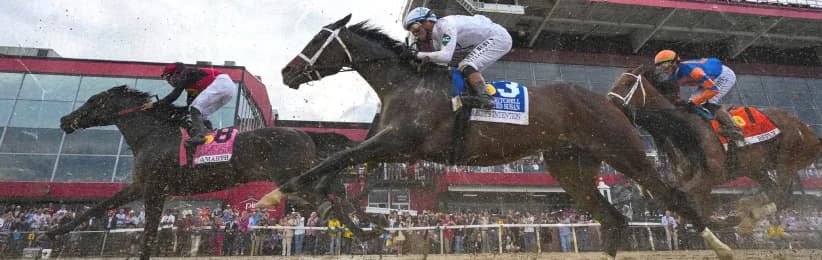
The Kentucky Derby is one of the easiest races for the public to over-bet. That also makes it one of the best races for sharps to mop up with bigger value Kentucky Derby odds deeper down the board. The Derby is a 20‑horse race, which often makes it pretty chaotic – and smart money and public hype aren’t usually on the same page.
The Derby is a Public Money Magnet
Depending on your source, the ballpark total number for betting on the Kentucky Derby has hit in the $440 million+ range in recent years.
Much of that handle is from your casual, recreational bettors who know as much about horse racing as they do about rocket science. That flood of casual money is drawn to the storylines. TV narratives and social media hype pushes things even higher on the noise-over-signal scale.
When that much public cash pours into a market, it drags the price of the favorite horses down, leaving little value in the Kentucky Derby odds at the top of the board. But we know that also leaves your Derby betting strategy more attractive when it comes to horses just outside the top tier. It often makes their odds fatter than they should be.
Day-of handle on the Kentucky Derby is huge. This tells you how much public opinion and money you’re dealing with. The last-minute betting strategy to bet on the same day as the race isn’t really a strategy for those who know horses, unless you’re reacting to late news. You know those bets are usually coming in from people who just want to grab a piece of the excitement for a few minutes. They’ll scan a few sites, read some Insta posts, and pick a name or two they like.
For a sharp bettor, that big amount of late money can be gold. You don’t need to beat other pros. You just need to let the crowd basically donate some extra value on horses they don’t know anything about. And then you cash in on those value plays.
Check the latest odds at Lucky Rebel.
Public Hype: Favorites, Narratives, And Bad Prices
The public doesn’t deserve all the shade though. They’re doing what mainstream Derby betting fans – or any sports betting fans – do. And Kentucky Derby favorites have done pretty well historically. It’s just not well enough to justify how over-bet those horses become by the time the gates open.
For the past 100+ years, the favorite has won the Derby 34% of the time, and they’ve landed in the top three 63% of the time. That sounds strong. Until you remember there can be up to 20 horses in the gate and the favorite is often below +500 mainly because of public demand.
If you’re constantly taking +300 or +450 on a bet that wins only about a third of the time, you’re not getting good value. But you are paying for the privilege of being on the right horse when you’re talking to your buddies, which is 90% of what public money likes to do.
Kentucky Derby favorites can go on long cold streaks though, so the odds can be even more overpriced if you catch them during a bad run of races. There was a 20‑year stretch from 1980 through 1999 without a single favorite winning the Derby. The current stretch? Since 2018, the main favorite to win the Kentucky Derby has been beaten every time. During that same time period, we’ve seen longshots like Rich Strike blowing up at +8000, paying over $160 on a $2 ticket. It’s good to remember that the Derby is chaotic and much less predictable than the public wants it to be, at least if you’re judging by their bet slips.
More bets that catch a bigger piece of the public handle, driven by the heavy TV and social buzz, can come in for top 3 finishes and other top of the board bets. Your Derby betting strategy has to stay out of the emotion game. Watch for traps like undefeated or storybook horses that are catching a lot of attention. And don’t be fooled by recent prep wins that people just watched on a national broadcast. Especially if the Derby conditions are actually looking bad for that horse’s racing style, those recent shiny finishes won’t matter. But people will overlook horse-and-course matchups when the headlines or recent results are loud enough.
By the time they race at the Derby, those horses are almost always trading worse than their true win probability. You’re just paying a surcharge to go along with the crowd.
What Sharp Money Actually Cares About
Sharps don’t care if their ticket matches what sounds cool on a podcast. They care about expected value.
At the Derby, that almost always means they’re shopping for horses who are away from the tightly priced fan favorites. Not +7500 longshots necessarily. You don’t need to go down that far. But they’re getting into the mid‑range horses, where probability and price line up nicely. Kentucky Derby horses in the +500 to +800 range can deliver a sweet spot where you can still get paid without the return being flattened by hype.
Instead of betting the most hyped horse, sharps will go through a checklist for their more value-ready horses to bet on:
- Has the horse shown the right progression in its prep races, especially when it comes to late‑pace numbers and finishing fractions?
- Is the horse’s running style suited to a 20‑horse field and the expected pace scenario, plus the expected course conditions?
- Does the trainer’s Derby record look strong? And, less important but still a factor, is the jockey a previous Derby winner?
- Does the post draw either improve or destroy the race we’re projecting for the horse we like?
We’re not normally into trends when it comes to betting on horse racing. But one solid trend is the importance of late energy in the final pre‑Derby prep. In recent years, a large majority of Derby winners have closed their final three furlongs of their last prep in under 38 seconds.
Sharps will pay attention to this. That’s because it suggests a horse can absorb Derby pressure and still finish strong. So if a mid-tier, solid plus-money horse is hitting that trend and the other items on the checklist add up, you’re looking at a good (possibly great) bet. The public mostly cares about who won that prep, not how they did it. So they’ll miss out on the value play, skip to the headline favorites, and leave more value on the table for the smart money.
Reading the Derby Betting Market
Smart money vs. public money can also be a valid tool for horse racing bets. Betting splits will give you more of a pure math approach, if you want more ways to find an edge.
Say a Derby horse is pulling 75% of the tickets but only 40% of the handle and the odds are drifting slightly up rather than down. That’s a classic sign. It means the crowd loves the story and is buying up tickets on the shiny favorite, but bigger, more respected bets are coming in on some other runners.
On the other side of that angle, if a horse has just 15% of the tickets but 30–40% of the money and the price has shortened since pools opened, that tells you the sharps are liking that runner while the public is overlooking the same horse.
Bottom line?
We know you’re not betting the Kentucky Derby like a fan. You should be willing to pass on the most hyped horse even if you think they’re the most likely winner. If the chalk is winning around a third of the time historically but showing up at odds that assume closer to 40–45% probability, that’s more or less dead money.
Just use those top horses as anchor bets in exotics and find a higher paying mid-tier horse that checks a lot of boxes to hopefully win the Derby for you.