
Individual World Series plays can make players legends or all-time
goats, and it always pays to do homework before betting on the Fall Classic
Late October amplifies everything in baseball, from heroic World Series moments to catastrophic mistakes.
Some of the iconic World Series plays we see every year in highlight reels impacted the actual results. Others changed how fans and bettors understood pressure and probability. Another one even changed how the networks cover the Fall Classic.
World Series history is packed with drama. Some moments just stand out above all the others.
Bill Mazeroski and Kirk Gibson Made One Swing Last Forever
You can’t read either player’s name and not instantly think of a World Series home run.
Bill Mazeroski. Game 7. Bottom of the ninth. Tie score. One swing to settle everything.
His home run off Ralph Terry gave Pittsburgh a 10–9 victory over the Yankees in 1960. It was the first walk-off homer to end a World Series and remains the only one hit in Game 7. (Joe Carter later delivered a championship-winning walk-off for Toronto in 1993, but that came in Game 6).
Since that day, millions of kids in ballparks and backyards have used the same script. It’s always “tie game, bottom of the 9th”. Mazeroski showed that the MLB championship could turn on one swing.
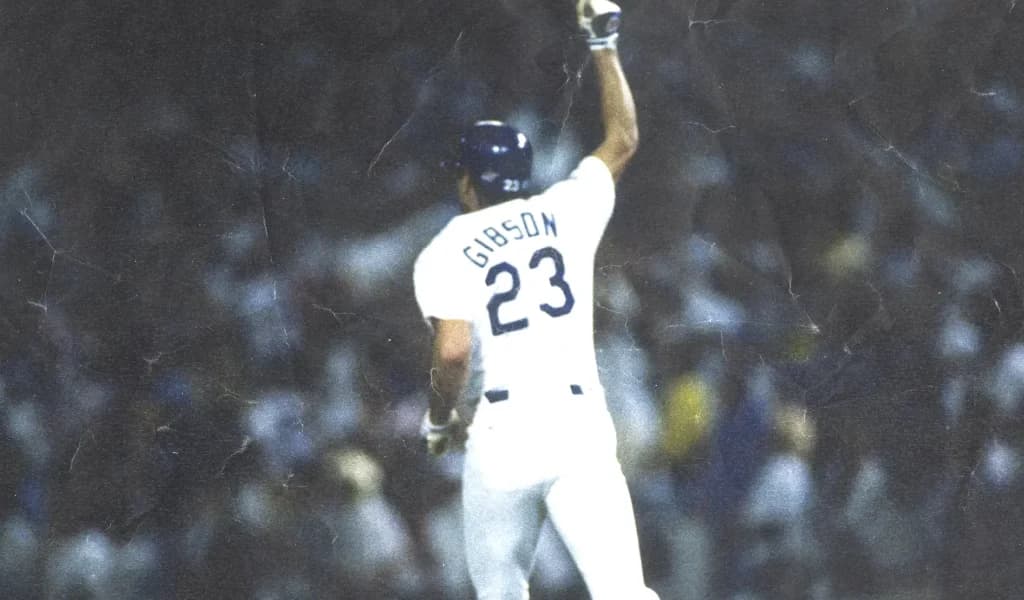
Kirk Gibson’s epic homer in 1998 was the next closest moment, just 38 years later and in a Game 1, not a deciding Game 7
Injured, Gibson didn’t start the game against the Oakland A’s. He could barely trust either leg. He had aggravated a strained left hamstring during the NLCS, then injured his right knee sliding into second in Game 7 in that same series. He took a cortisone injection and then sat on the bench when the World Series opening lineup took the field.
MLB betting fans didn’t even expect to see him at all. The Dodgers were +170 underdogs to win the championship against Oakland. Gibson came off the bench with two outs in the ninth against Oakland closer Dennis Eckersley.
Every World Series highlight reel since has shown his two-run homer and his stiff, fist-pumping home run trot that turned a Dodgers’ 99.9% certain loss into a 5–4 victory. MLB stats pages remind us that it was his literally his only plate appearance of the entire Series. Los Angeles won the World Series in five games.
Mazeroski and Gibson weren’t exactly changing how baseball was played. The impact was more around the mythology of “one man, one swing”. The idea that no team is ever truly done in a World Series until the final out.
Carlton Fisk and a Rat Changed Baseball on TV
Carlton Fisk’s home run in Game 6 of the 1975 World Series took baseball watchers to a new place.
Leading off the bottom of the 12th at Fenway Park, Fisk homered to give Boston a 7–6 victory over Cincinnati. The lasting image we see today from that epic dinger was less of the ball clearing the wall, much more of Fisk hopping near home plate, waving it fair with as much body language as possible.
That reaction became a turning point in how television presented baseball.
Camera operators before that time had generally been instructed to follow the ball, not the player. This time, NBC’s camera inside the Green Monster stayed with Fisk. Cameraman Lou Gerard later said it was a nearby rat that had distracted him from following the usual path of the ball. For Fisk, that rat turned the moment into an accidental close-up of emotion on the field that fans didn’t usually get to see.
It helped establish the reaction shot as an essential part of baseball storytelling.
We take it for granted now, with slo-mo and a dozen different angles. Today’s World Series broadcasts deploy around 40 cameras. They capture everything from an umpire’s view to a hitter’s smallest reaction. Fisk’s famous wave back then was a real novelty and TV viewers ate it up.
Bill Buckner Became the Face (and Legs) of Failure
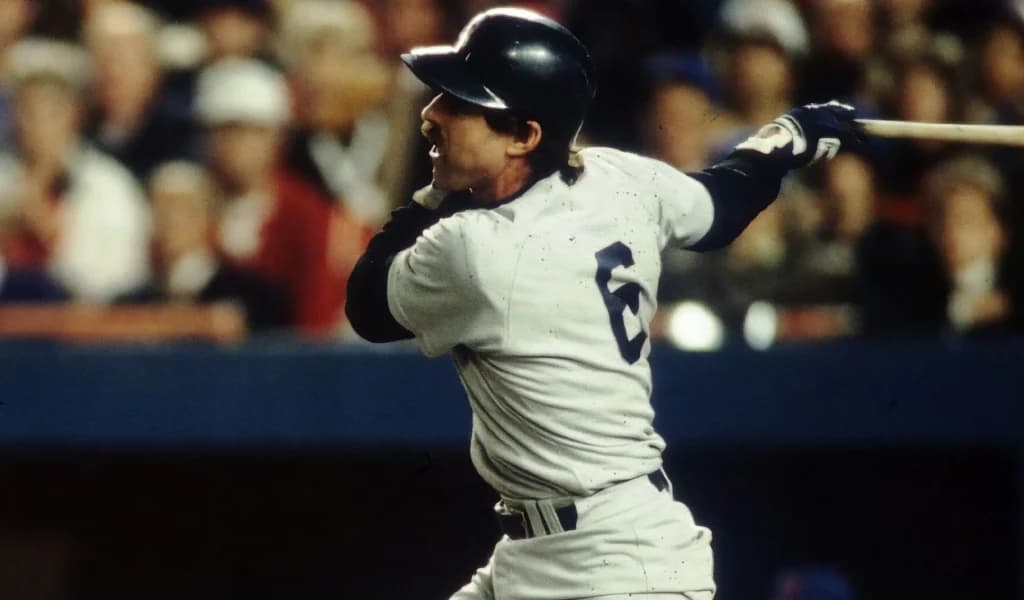
The ground ball through Bill Buckner’s legs in 1986 became a symbol for Boston heartbreak and an overall symbol for a sports team or a player choking. It also became a lesson in how unfair sports is sometimes.
The Red Sox led the Mets by two runs in the bottom of the 10th inning of Game 6. With two outs, New York put together three consecutive singles.
Before Buckner’s famous error, Boston pitcher Bob Stanley actually threw a wild pitch that brought home the tying run. Before Stanley came into the game for that at-bat, it was Calvin Schiraldi who gave up the three singles.
It was only after that wild pitch when Mookie Wilson hit the grounder Buckner couldn’t handle. To be fair, it was a brutal mistake to see. A slow roller, picked up 99 times out of 100, that spun under Buckner’s glove. The issue that fans forget is that the lead was already blown by Boston’s pitchers. Buckner himself did not lose that game.
It also wasn’t the end of the World Series. It just kept the Mets alive and able to head to Game 7, which they won. If the Red Sox win that deciding game, Buckner’s infamous goof would be gone from our memory completely. He’d be remembered for a massive 22-year career.
Instead, the off-field reaction was brutal. Buckner received death threats for years after. He eventually moved to Idaho to get away from the constant shadow of that one moment.
MLB playoff and World Series bettors should still remember that it was mainly pitching, not defense, that ruined many bet slips (and Bosox fans’ dreams). Baseball bettors, especially in the World Series, should pay close attention to bullpen depth. And fans should cut Buckner some slack. Fortunately, they did welcome him back with the ceremonial first pitch in 2008 and a standing ovation.