
Go beyond home run leaders and look at exit velocity, pull percentage, fatigue and derby format.
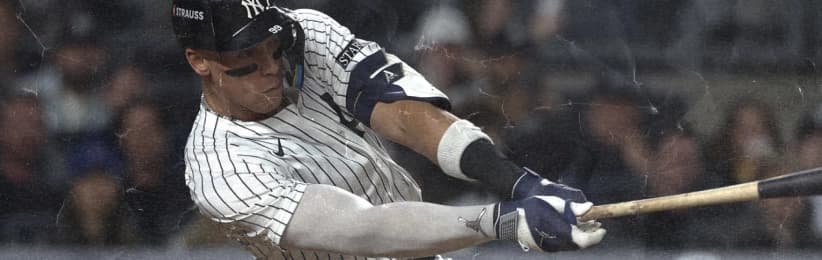
Every year, the Home Run Derby odds shade towards the biggest stars in the event, while it’s the lesser-known guys that could make for a great payday. MLB All-Star betting offers a ton of ways to get action on the entire event, but the game itself is often a bit player compared to the Home Run Derby.
If you’re into Home Run Derby betting, you need to go way beyond just who’s going yard more often than anyone else.
Raw Power: Exit Velocity Is Your Starting Point
It starts with how hard a guy hits the baseball. Exit velocity is great as a first filter when lining up your bets. Since Statcast started tracking the Derby in 2016, the winners and serious contenders are almost always near the top of the league in average exit velo. They also top the stat sheet in terms of hard-hit rate numbers during the season leading up to the MLB All-Star break.
Exit velocity matters at the Derby because hitters need to repeat their maximum-effort swing on command. Casual bettors are looking at the name on the back of the jersey way before they look at deeper exit velocity stats. Sharps know that the Derby is way less about brand names than it is about sustainability, endurance, and margin for error.
If a guy is already regularly mashing in the 115-118 mph range on his hardest balls in games, he has more margin for error in the timed, high-volume setting that is the Home Run Derby. In other words, even when he drops off slightly after a few minutes, he’ll still have the potential to send balls over the fence.
Ballers like Aaron Judge and top contenders like Oneil Cruz and Junior Caminero have shown off 117–119 mph type home runs before. These are numbers that only a tiny percentage of MLB hitters can touch.
Check out the latest MLB odds at Lucky Rebel.
Pull Percentage and Directional Power
Sluggers are like snowflakes: no two are identical. (Don’t tell them we called them snowflakes).
Every hitter has their tendencies, and in the Derby those tendencies are either an advantage or a disadvantage, depending on the ballpark.
This is where pull percentage comes in.
In MLB games, all-fields power is part of being a complete hitter. It also matters based on different game situations in different ballparks.
In a Derby, all this goes out the window. People just want baseballs in the sky and in the seats. It’s a single ballpark for just one evening. For MLB All-Star betting, you usually want the single-minded contender standing in the box, deciding to go to his pull side on every pitch for the next four minutes.
Historically, Derby champs skew toward strong pull-side power, of course. You want to look at their regular-season data and see who puts up above-average pull rates on fly balls and where their longest homers are yanked. When someone with those numbers locks into a groove on that All-Star night in July, you could see runs of six, seven, eight straight pulled homers without a break.
Watch for the Home Run Derby at Wrigley in 2027 and bet accordingly. Could be the Derby equivalent of a track meet, especially if the wind is blowing out that day.
Find an Edge in the Stats
There are exceptions to the pull stats, of course, and in those you might find a mispriced edge.
Some big hitters have surprisingly low air pull rate, aka the share of their hits in the air that are hit to the pull side. You’ll occasionally see a Derby entrant with an air-pull rate around 10%, which is roughly half the league average. Guys like Vladimir Guerrero Jr., Yordan Alvarez, and Giancarlo Stanton. They can still be Derby monsters because of sheer exit velo and overall power.
Those types of players can absolutely win the Home Run Derby in any given year, but they often need more pitches and more time to find a consistent approach. Check the latest Derby format to see if there’s a pitch limit or if the outs rule has changed. A pitch limit leaves less room for these low-pull rate bats to find a ball they like that they can hit anywhere.
To find another edge in the odds, pull percentage on flies is a useful tiebreaker in mid-range prices for Derby lines in the range of +600 to say +1200. A hitter with elite pull-side power and a history of long pulled homers that match the host park’s dimensions is exactly the profile that tends to outperform their current season totals in the Derby.
Look Beyond Pull Rate
What you want to see is not just how many homers the Derby entrants have hit since early April. Leave that for the casuals. You don’t even need a top 5 or 6 home run leader in the standings. More telling is when their batted-ball spray map looks like a Derby swing already. When those two things line up with high-end exit velo numbers, you might have a legitimate live ‘dog’.
The 2026 Home Run Derby winner Jordan Walker was one of the longest shots on the board. Walker was 9th in the NL in homers and only in 4th place out of the 8 Derby competitors.
Bettors who cashed on Walker in ’26 saw his exit velocity, ranked in the top 2% in all of major league baseball, and his bat speed, which was #1 in MLB, and liked the payouts attached with his longer odds sitting in the +650 to +800 range.
Fatigue, Stamina, and the So-Called “Curse”
Home Run Derby fatigue is real. The catch is that it applies only during the event though, and not for the remainder of the season.
The hitters are being asked to basically pull out their maximum swing 20 times in the first round and 15 times in the semis and the final. All with minimal rest between swings. You can see some guys lose their legs and start mis-hitting balls late in rounds.
Winners tend to maintain their bat speed and exit velocity deep into the contest. The ones who fade usually do so because their timing goes sideways as their arms and legs start burning.
For MLB betting on the rest of the season though, forget the “curse” that says Derby participation wrecks hitters for months afterward. The data says the curse is mostly narrative stuff for the sports shows. Guys recover quickly. It’s not something you should price into futures or second-half props.
Derby Format – Make Sure You Keep Up with the Changes
The Home Run Derby has gone through multiple rule changes, so it pays for bettors to keep up.
Each tweak to the rules every few years changes who has an edge when it comes to being the Derby king. The current format just ditched the timed rounds of the last decade and simplified things. The format in the last 10 years made guys who tired more easily get longer odds.
Now, the more “pure” slugger is back in fashion. Whoever has the most dingers in 20 swings gets to move on as the top 4 out of 8 advance from the first round, and the longest distance homer in that round wins any tiebreaker.
This also makes head-to-head Derby bets more attractive for the sharps. You can more easily see the barrel rate leaders and pure sluggers going against guys with lesser numbers. If the brand names are mispriced, there’s your edge.
Sign Up to Lucky Rebel Today.